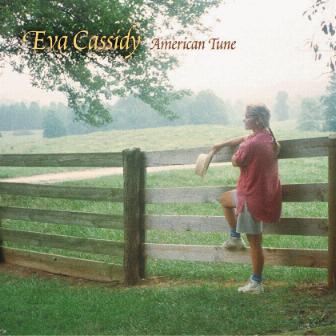
The song: “American Tune” has a long and interesting history. The melody can be traced back to the German composer Hans Leo Hassler (1564-1612), who originally wrote it as a love song called “Mein Gmüth ist mir verwirret” (“My mind confuses me”). The tune was later transformed into a hymn with the lyrics “Herzlich thut mich verlangen” and later “O Haupt voll’ Blut und Wunden.” Johann Sebastian Bach borrowed the melody for his “St. Matthew Passion,” where it can be heard five times at different points in the oratorio. Today the melody is still found in hymnals of many denominations, with the lyrics “Because All Men Are Brothers,” among others. In 1973, Paul Simon continued the transformational life of the ancient tune when he penned the lyrics beginning “Many’s the time I’ve been mistaken” and called his song “American Tune.” Rolling Stone declared it to be the best song of that year!
Eva learned “American Tune” from her father, Hugh Cassidy. He comments, “We used to sing that in our family band, Dan and Eva and myself, along with ‘Desperado’ and quite a few others, in the early 1980s. To me, ‘American Tune’ is probably the best song on this album. The words lay out well, the way they hang upon the air. Eva’s phrasing is a lot of what Eva’s about, and when you put that together with her voice, her pacing, her style, her use of dynamics, you really have something beautiful. She always had that sensitiveness.”
 The recording: Eva’s “Dark-Eyed Molly” was released on the album AMERICAN TUNE in 2003.
Blix Street’s Bill Straw had three different versions of “American Tune” from various performances, and he was having a hard time deciding which one to select for the album. Ultimately he invited Grace Griffith to listen and decide. Grace did not hesitate in identifying the September 10th, 1994, “Live at Pearl’s” version as the best of the three, and it is that recording you hear on the album. Pearl’s was a storefront restaurant in Annapolis where Eva sometimes performed solo. On two of these occasions her friend Bryan McCulley brought his video equipment along to tape Eva’s performance. He plugged his equipment directly into Eva’s soundboard to record the audio portion. Bryan’s fortuitous recordings of those two nights at Pearl’s, in September 1994, have preserved forever some of Eva’s most beautiful vocal performances.
“This recording makes the world a better place,” declares Chris Biondo, who also says “‘American Tune’ may be one of the top five best things that have been on an Eva record, especially in this version. I think it’s an amazing achievement that it is a live performance, with Eva both playing the guitar and singing it.” Keith Grimes agrees: “When vocal songs are done with an instrumental group, there are benefits. For one thing, you get arranging possibilities that aren’t available to a solo performer. But there’s also something special that happens when one person, self-accompanied, puts a song across completely. Eva has a powerful gift for that. It’s so fortunate that these solo performances were recorded.”
Eva’s friend Celia Murphy was in the audience at Pearl’s that night, September 10th, 1994. “I really like that song, and I remember that Eva was really getting into it. But I kidded her about it afterwards, I said ‘Eva, how come you never do the next verse?’ She looked at me like ‘What are you talking about?’ It was one of those Eva stares. I sang her the next verse and she said, ‘Oh…. yeah.’ So, one of the verses is missing.” Chris Biondo comments, “Eva had a lot of lyrics to remember, if you think about it. She used to write them in a notebook, but she almost always sang from memory.” The other two recordings of “American Tune” likewise do not contain the missing verse.
Someday I would love to interview Paul Simon about “American Tune”! I have read that he wrote the lyrics to express his disillusionment with the political situation in the United States, following the Watergate scandal.