(This is a fact sheet about the Kennedy Center, located here for the convenience of the webmaster.)
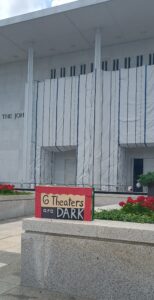
WHY ARE SIX BEAUTIFUL THEATERS DARK?
Contrary to what you may have been told, it isn’t because of physical neglect. The public and private sectors poured hundreds of millions of dollars into fully modernizing these world-class stages. They are dark by administrative choice, not structural necessity. (Note: All Federal appropriations listed below were authorized by an Act of Congress and signed by a President.)
Opera House: Famous for the yearly Kennedy Center Honors television show, this 2,347-seat venue hosted major opera, ballet, and large-scale musical theater and was the home of the Kennedy Center Opera House Orchestra. It was extensively renovated during the 2004-5 season, overhauling the entire orchestra level, seating, and main entrances primarily through Federal appropriations. These infrastructure overhauls were directly paired with multi-million dollar private donations to install state-of-the-art theatrical lighting and sound tech.
Concert Hall: Seating 2,465, the Center’s largest venue was the home of the National Symphony Orchestra. A $14 million project in 1997, funded primarily through Federal appropriations, rebuilt the acoustics, added a high-tech canopy, and updated accessibility. A new pipe organ was installed in 2012, funded entirely by then-Chairman David M. Rubenstein.
Eisenhower Theater: This 1,161-seat theater hosted plays, ballet, contemporary dance, and smaller musical theater productions. An Act of Congress named it to honor President Eisenhower. In 2007-8, “The Ike” received a massive 16-month, $17.9 million comprehensive renovation (expanded seating, a new convertible orchestra pit, and modern stage tech) paid for primarily through Federal appropriations and finished with matching private foundation gifts to complete the interior aesthetics.
Terrace Theater: This 490-seat space was “the busiest theater within the Kennedy Center, hosting up to 180 performances each year.” Opened in 1979 as a Bicentennial gift from the people of Japan, it underwent a $21.8 million, down-to-the-studs acoustic and aesthetic transformation between 2015 and 2017. The core structural and ADA overhauls were funded entirely by Federal appropriations, while a concurrent private fundraising campaign secured international corporate gifts to redesign the theater’s interior finishes.
Family Theater: This 320-seat theater replaced the former American Film Institute theater in 2005. The state-of-the-art $9 million project was financed entirely through private philanthropic donations. It hosted performances for families, chamber music, dance, lectures, and the acclaimed Page-to-Stage festival.
Theater Lab: Designed originally to be a flexible “black box” for avant-garde work, children’s theater, and college productions, this space housed the whodunit Shear Madness for a record-setting 14,737 performances from 1987 through 2026. In 2012, the show temporarily moved to the Family Theater so the Lab could undergo extensive modernization, paid for using Federal appropriations.
Public Spaces: In late 2023 and early 2024, nearly 90,000 square feet of iconic red carpeting was replaced in the Grand Foyer, Hall of Nations, and Hall of States using Federal appropriations. To keep the building fully open and operational for the public during the day, crews worked exclusively overnight.